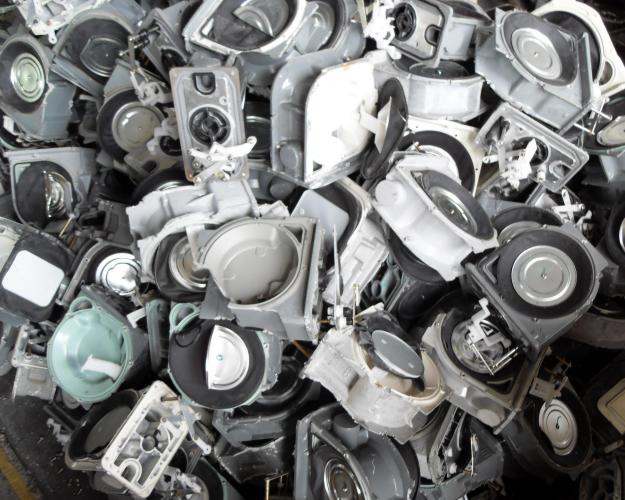
Metal surface grinding machines are essential tools in metal cutting and metal surface finishing processes. Today, these machines come from various manufacturers, creating a wide diversity of models. This allows customers to easily choose the machine that best suits their specific needs.
1. Understanding the Metal Surface Grinding Process
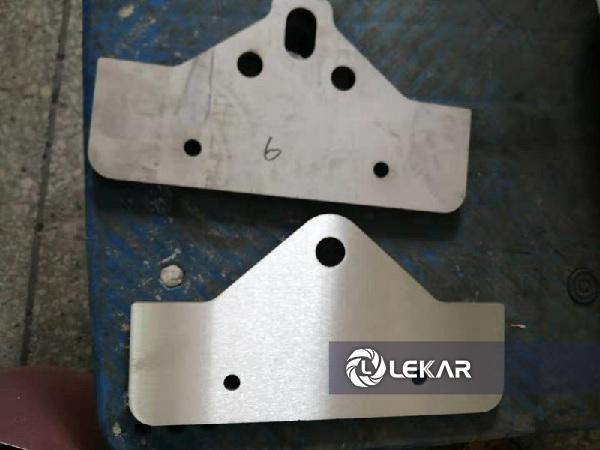
In the process of finishing metal products, smoothing and polishing the metal surface is a crucial step that enhances both the aesthetic and functional value of the product. “Grinding” and “polishing” are machining processes that involve removing a layer of metal from the surface through cutting action. This typically involves the use of hard abrasive particles, either bonded together or attached to a carrier, which, when used with a grinding machine, produce a highly smooth, bright, and polished surface.
2. Types of Metal Surface Grinding Machines
Metal surface grinding machines used in industrial production are primarily employed to remove burrs from metal surfaces. After manual machining processes such as turning or milling, the product surface is typically left at a rough level. To achieve a fine or ultra-fine polish, the surface roughness or unevenness must be reduced through a process known as smoothing or polishing the product surface.
The machining steps generally include: rough grinding → semi-fine grinding → fine grinding → ultra-fine grinding (polishing).
The purpose of surface grinding is to make the product surface clean and smooth, eliminating sharp edges and corners according to requirements, resulting in a polished, bright, and aesthetically pleasing finish. Polishing is mainly applied to products intended for consumer use where appearance and visual quality are important.
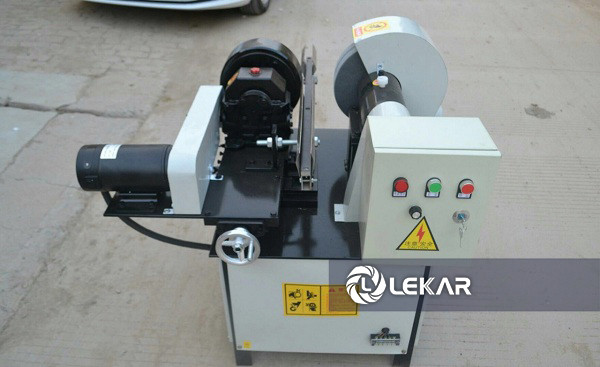
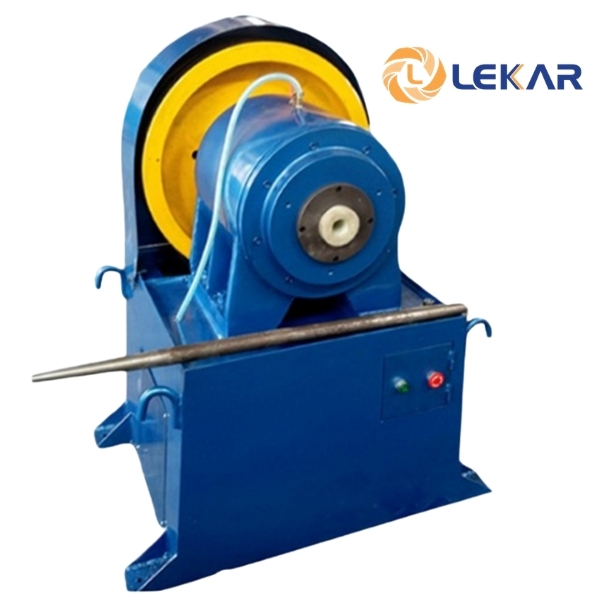
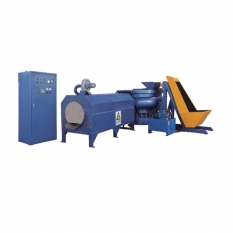 Currently, the market offers a variety of metal surface grinding machines, such as 3D vibratory polishing machines and abrasive wheel grinders, among others.
The most common and widely used machine in production workshops is the specialized abrasive wheel grinding machine. This machine removes burrs from products using friction generated by the high-speed rotation of the grinding wheel when the product comes into contact with it. However, this manual grinding method has some drawbacks: it is time-consuming, labor-intensive, and produces uneven results depending on the operator’s skill. Additionally, the friction-based burr removal generates dust, which can affect workers’ health. To overcome these disadvantages, companies can invest in automated grinding lines, though the relatively high capital cost makes them suitable mainly for large-scale production facilities.
3D vibratory polishing machines offer an alternative to manual grinding. They efficiently and effectively remove burrs at a lower investment cost. Using a spiral three-dimensional vibration mechanism, the products and polishing media continuously contact and rub against each other, ensuring that burrs are smoothed evenly across all edges and surfaces of the product.
3. Some Common Metal Grinding and Polishing Machines
Centrifugal Barrel Polishing Machine
Machine Structure: A basic centrifugal barrel polishing machine consists of a polygonal-shaped barrel mounted to rotate on a shaft driven by a motor. The interior of the barrel is lined with wear-resistant material. The workpieces and abrasive media are placed inside the barrel to perform the polishing operation.
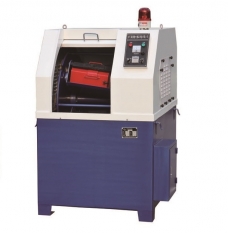
- Principle: The workpieces are placed together with abrasive media inside the barrel. As the barrel rotates, the abrasive media rubs against the surface of the workpieces, removing uneven material and smoothing the surface. The workpieces and abrasive media are continuously tumbled.
- Advantages: The constant contact between the workpieces and abrasive media ensures effective polishing, covering almost all surfaces of the products.
- Disadvantages: In addition to polishing the workpieces, the abrasive media also rubs against each other, which can sometimes cause scratches on the product surface. The machine cannot operate at very high speeds and produces significant noise.
- Applications: Mainly used for small products to remove burrs and sharp edges, for workpieces with sufficient hardness that will not be damaged, and for products requiring a low level of surface shine.
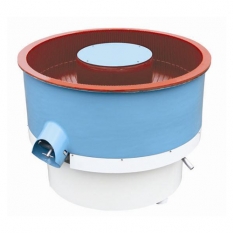
Vibratory Polishing Machine
- Machine Structure: A vibratory polishing machine consists of a round tray mounted on a vibrating base supported by a spring system. The motor is mounted directly on the tray, generating vibration through an eccentric rotor.
- Principle: When the motor runs, it produces vibration, causing the workpieces and abrasive media placed in the tray to rub against each other. The mixture is continuously tumbled and rotated around the tray by centrifugal force, ensuring even polishing.
- Advantages: The machine is highly effective for small-sized products, providing uniform polishing across surfaces. The abrasive media can reach small corners, and noise levels are lower compared to a barrel polishing machine.
- Disadvantages: Suitable only for small to medium-sized products with moderate surface shine requirements. Collisions between products can sometimes cause scratches, and the overall polishing intensity is lower.
- Applications: Used to polish mechanical parts after basic machining (turning, stamping), remove burrs from cast products, and polish consumer products made of aluminum, copper, and similar metals.

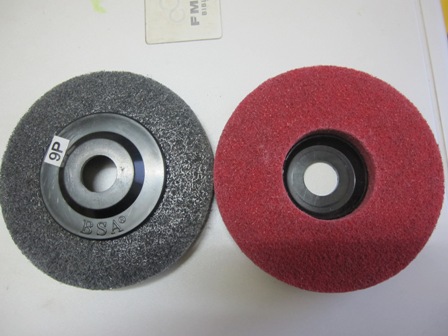
Polishing Machine Using Cloth Wheels, Sandpaper, and Buffing Pads
- Structure: The machine is equipped with a rotating shaft for mounting polishing wheels, which can be installed directly on the motor or through a transmission system. It can operate with circular polishing wheels or abrasive sanding belts.
- Working Principle: When the polishing wheel rotates, the abrasive materials on the wheel surface interact with the workpiece. By pressing the rotating wheel against the product surface, abrasive particles remove surface irregularities to achieve a smooth and glossy finish.
- Advantages: The machine can produce very high surface gloss. Its polishing speed is adjustable, and it can be used for various types of products. It allows flexible replacement of abrasive materials and is capable of polishing large surface areas.
- Disadvantages: The machine cannot reach all surfaces of a workpiece, especially tight corners or narrow areas. Polishing generates a large amount of dust; therefore, a dust extraction system is required to avoid air pollution and ensure operator safety.
- Applications: Widely used for polishing products with large surfaces, such as household items. Suitable for polishing stainless steel, copper, aluminum, and steel components.
Based on the information above, customers can easily evaluate and select the appropriate metal grinding or polishing machines that best suit their specific products to achieve optimal results. Feel free to contact us for further assistance!
LEKA POLISHING TECHNOLOGY JOINT STOCK COMPANY – LEKAR GROUP
Head Office: Unit 11, Louis VII Street, Louis City Urban Area, Xuan Phuong Ward, Hanoi.
Northern Branch: Lai Xa Industrial Cluster, Hoai Duc, Hanoi. Tel: 0243 7646469
Southern Branch: Nam Tan Uyen Industrial Park, Tan Hiep Ward, Ho Chi Minh City. Tel: 02873 033386
Website: danhbongkimloai.com.vn | lekar.vn